 Brightest Games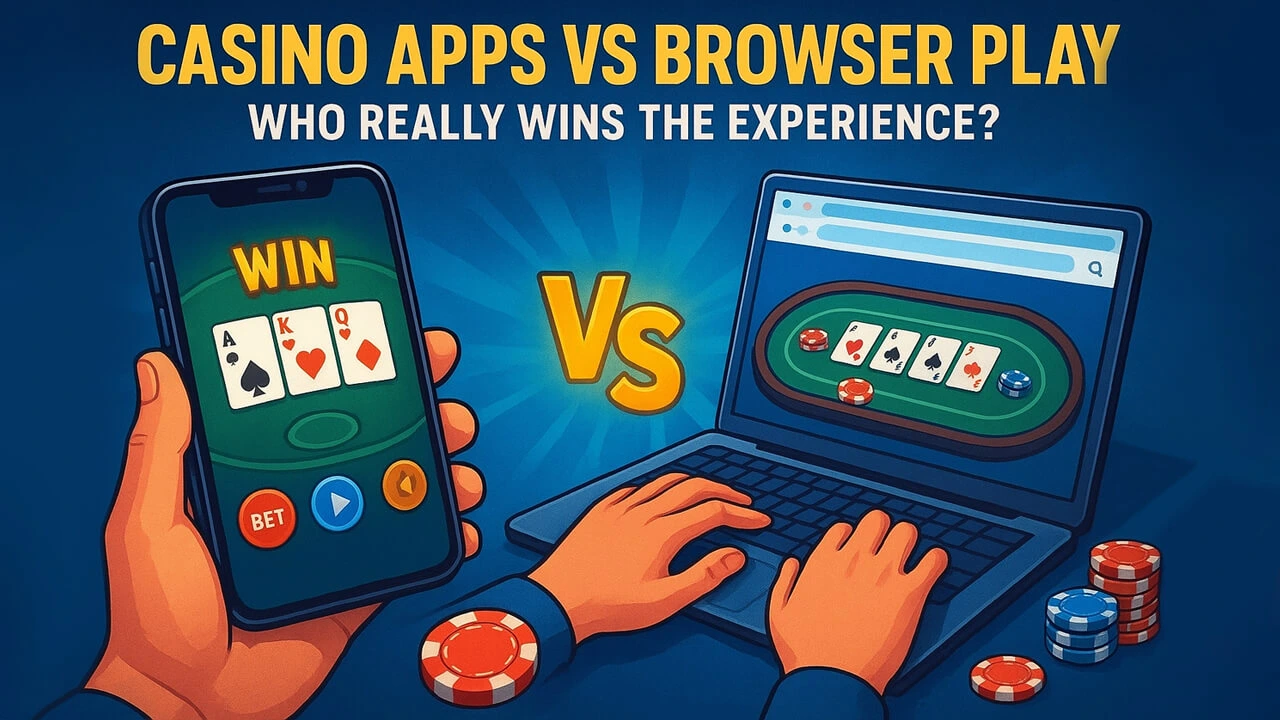
📱Some differences between casino apps and browser play are immediately obvious. Apps tend to look sharper, load faster, and feel more like a game built for your phone, while browsers offer a kind of universal access. Open any device, any time, and you can keep multiple tables, games, or tabs running at once.🌐
That convenience sounds great on paper, and in a quick slot spin or a couple of casual blackjack hands, it might not make any difference at all. But stretch that same setup into a live poker tournament or a high-stakes session, and suddenly those tiny gaps in performance start to matter. The extra seconds a browser takes to refresh or shuffle between tables aren’t just minor annoyances, they’re cracks in your rhythm, openings for mistakes, and easy ways to leak money without even realizing it.
Once the blinds go up and the pressure starts to climb, you find out just how expensive every second can be. In a game where decisions need to be instant and your focus razor-sharp, even a slight delay or clumsy interface can be the difference between staying in the hand and getting pushed off the table.
The Pace That Decides If You Stay In The Game
Mobile apps keep the core files on your phone, which cuts out the wait time between hands. Everything is ready the moment you open it, from the tables to your balance, without the reloads that slow down browsers.
The best casino apps push it further, games switch with no delay, payouts are clear within seconds, and every detail is built for the small screen. In a live session, that smoothness is the difference between staying in rhythm and watching a freeze cost you the pot.
Playing Straight From Your Hand
On a phone, the real difference is whether you can actually play with one hand. Strong apps set this up right, buttons fall under your thumb, layouts don’t feel cramped, and every swipe lands where it should. Baymard’s research shows more than 70% of mobile sites still miss here, with touch targets too small or awkward to use.
That might be fine when you’re scrolling through a shop, but in a game where timing matters, it slows you down. Browsers, meanwhile, shrink the full site to fit your screen. Everything’s there, but it’s jammed together, and you end up fighting the layout just to keep up. At tournament pace, that drag eats at composure long before the blinds do.
Built-In Advantages You Only Get On Mobile
Some tools go beyond smoother play, and security is the clearest edge: fingerprint scans, face recognition, and two-step checks mean your account isn’t just sitting behind a single password. With encrypted payment channels and session locks, you get a setup that a browser can’t match:
- Stronger logins with biometrics: shut down stolen passwords before they ever hit your account.
- Real-time alerts: Instant updates on payouts, wins, or suspicious logins.
- Offline practice: keep the games running even when your signal cuts out.
- Secure storage: keeps data sealed inside the phone’s OS, beyond the reach of browser leaks.
- Verified installs: tie rewards and bonuses directly to your account, making fraud harder to pull off.
When The Signal Drops
An app doesn’t lean on the internet for every move, most of the files live on your phone, so the table runs even if your signal takes a hit. You might get a slight pause, but the game itself keeps rolling.
On a browser, it’s different every card flip, sound, and balance check has to come straight from the site, and the second the connection lags, you feel it. Whether it’s a reload or a freeze, it pulls you out of the zone. Over a long session, those interruptions add up, and once you lose rhythm, getting it back isn’t easy.
The Mental Edge Of Seamless Play
The overlooked factor is how quickly tiny breaks pile into real mistakes ❌. A recent study involving long sessions of casual gaming found that interfaces that preserve flow, avoiding pauses, maintaining visual consistency, and keeping critical touch-points easy to reach lead to significantly less mental fatigue.
Players reported higher satisfaction and sharper decision-making when games didn’t force extra waits or awkward interaction moments.
When latency slips or buttons feel fuzzy, every pause costs more than time. Apps that load graphics, balance, and game state quickly let you maintain concentration. That uninterrupted play adds up: clarity in your mind, steadiness in your decisions, even late into the game.
Why Instant Feedback Keeps You Hooked
What really separates apps from browsers is the way they deliver feedback the moment something happens. A win hits your balance instantly, the screen updates without delay, and notifications land while you are still locked into the game.
Studies show that the tighter the gap between action and outcome, the stronger the pull to keep playing. Apps lock that loop together balance changes, visuals, and sound firing in sync so every hand feels immediate. Browsers, stripped of that layering, leave rewards as plain numbers on a page. You see them, but they never land the same way.
🎯Conclusion
The real battle between casino apps and browser play isn’t just about faster load times, slicker graphics, or smarter layouts. Those things matter, but they’re surface-level. Underneath, what’s really at stake is the way each platform shapes the entire experience of the player.🧠Speed and design are tools, flow and focus are the real prizes.
Mobile apps excel because they remove layers of friction that can quietly erode performance. Every second saved on loading, every interaction designed for a thumb instead of a mouse pointer, every payout that appears instantly instead of after a refresh, all of these micro-improvements add up. Together, they form a playing environment where your attention stays locked in, your rhythm stays unbroken, and your strategy can unfold without interruptions. In games that reward precision and timing, that uninterrupted momentum becomes a powerful edge.
🌐 Browsers, by contrast, win on openness and reach. You can log in from virtually any device 💻, open multiple tables at once 🪑🪑🪑, or jump between games without installing anything. That freedom is valuable, especially for casual players who just want a quick spin 🎰. But the same openness that makes browsers convenient also creates cracks ⚠️: small delays in updating balances, cluttered layouts squeezed onto small screens, or re-authentication prompts at the worst moment 😩. Over a long session, those cracks widen, draining focus and creating decision fatigue 💤 before you realize it’s happening.
In competitive play, where the margins between winning and losing are measured in milliseconds and micro-decisions, those cracks matter. They don’t just cost time, they cost composure, confidence, and sometimes the pot itself. That’s why mobile apps have moved from being a side option or a novelty to becoming the main arena where serious play now happens. They’re no longer just a prettier version of a website, they’re purpose-built environments that reinforce performance, protect security, and preserve the mental bandwidth players need to stay sharp.
Ultimately, the choice between app and browser is about more than convenience. It’s about whether the platform supports your focus, strengthens your rhythm, and minimizes the distractions that lead to mistakes. For casual players, browsers may still do the job. But for anyone who treats gaming as more than a pastime, as a test of skill, strategy, and endurance, the advantages of mobile apps create a decisive difference. In the modern casino landscape, that difference is no longer optional. It’s the new baseline for serious play. If it were for me, I would choose the browser-based online game experience.
Date Added: Tuesday, 23 September 2025 (GMT-5) Time in Chicago, 07:08 IL, USA
Related Articles: 9 Most Exciting Games Announced For Release In 2025
Which GTA Had The Best Casino Gaming?
Germany's Favorite Online Games And Apps
Privacy-Enhancing Technologies In The Crypto Gaming Economy
Next Level Gaming: VPN Configs For Speed And Safety


