 Brightest Games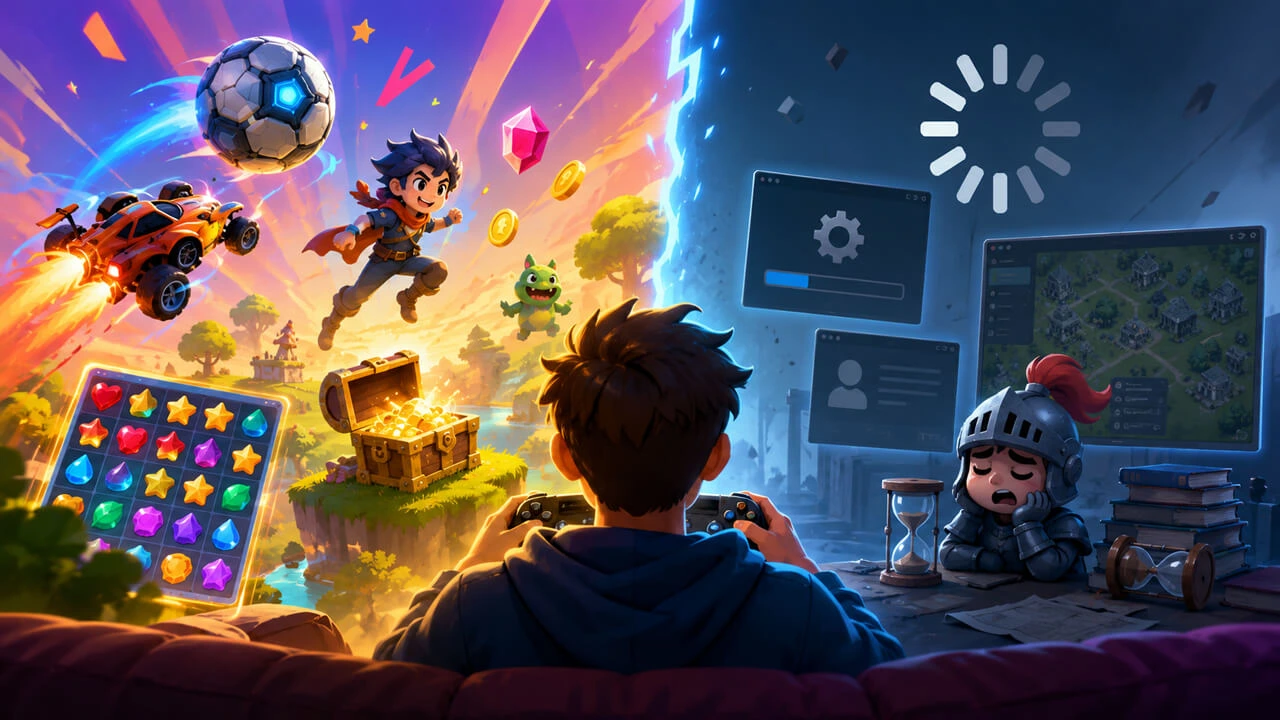
🕹️ Some games barely need to introduce themselves before they’ve captured your full attention. A single tap seems to seamlessly turn into a reward, and a simple choice creates just enough curiosity to make you wonder what happens next.
On the other end of the spectrum are games that push people away by asking for a commitment before they’ve earned your attention. Even if they hook you in with impressive features and interesting content, the fact that the first few minutes feel like homework can prevent that initial spark from happening.
Behind that instant sense of momentum isn’t a secret formula, but how quickly a game can create a meaningful connection between action and reward. The faster it creates that first satisfying moment and kickstarts that action-reward loop, the less effort it takes for players to feel invested. But the design philosophy goes deeper than just creating fast feedback.
Between The First Click And The First Reward
First impressions matter. Whether it’s meeting someone for the first time or playing a new game, the opening moments need to give you a reason to keep going. With games, the design challenge is proving that playing is worth your time before you have any reason to care.
The strongest games on the market have solved that problem by keeping the distance between an action and a response incredibly tight. That’s not to say all these games provide instant major achievements and rewards right away. Sometimes they’re simple satisfactions, like a gratifying sound after solving a puzzle, or a star appearing after a click, or a small animation that confirms you did something right. The most important part is that the player immediately makes the connection between what they did and what happened because of their actions.
Fast-hooking games remove all the noise and complications that delay that moment. Anything that “gets in the way,” such as long tutorials and complex menus, all create friction between curiosity and reward. No matter how curious someone is about a game, an abundance of barriers may prevent gameplay from happening entirely, and players may never experience what makes it enjoyable. Good design makes the first payoff nearly effortless to reach. The cycle of giving players a basic action to complete, providing clear feedback, and creating some momentum to encourage continuity of the cycle is what turns a first-time player into someone invested in the experience.
The Fastest Feedback Loop In Gaming
If there was a quintessential demonstration of the fastest possible action-reward loop, it would be the slot machine. Almost every element of its design serves a united purpose of minimizing the time between making a decision and seeing the outcome. The player isn’t expected to learn a complicated system or work toward a distant objective. Everything is designed for simplicity, from pressing a single button to the rapid reel animations and instant feedback. The experience is engineered to keep players moving through one complete action-reward cycle in just a few seconds. There’s also very little downtime, allowing each cycle to flow naturally into the next.
To keep up that momentum, dozens of small design choices foster that reinforcement. Rather than having the reels stop all at once, they stop one after another to build anticipation. Near misses, whether intentionally designed or naturally occurring, create the impression that a larger outcome was just within reach. Winning combinations trigger celebratory sounds and bright animations that make even the most modest payouts feel rewarding. Many modern titles go steps further and add cascading reels and multipliers that extend the sequence without interrupting its rhythm, keeping players engaged through a steady stream of interactions and eye candy.
Looking across a comparison of slot games, the underlying pattern becomes hard to miss. Fantasy worlds, ancient civilizations, and unique bonus mechanics might give each title its own personality, but beneath all the aesthetics lies the same tightly engineered structure mentioned above. While that design philosophy isn’t exclusive to slots, few genres present it so purely.
Instant Feedback Across Genres
Slot machines might represent the fastest and most transparent version of the action-reward loop, but they’re certainly not the only games designed around it. Plenty of today’s casual games disguise that structure beneath different mechanics.
If we look at match-three games, we’ll see that despite a swap taking only a second, the game instantly responds with disappearing pieces, score increases, and new tiles cascading into place. Games like Candy Crush Saga build multiple layers of feedback into a single move, making every interaction feel productive, even when it doesn’t fully complete a level. Even the simplest type of game, idle clickers, uses a similar approach. In games like Cookie Clicker, a single click immediately increases your total, unlocking upgrades or new goals within minutes. As the game progresses, those feedback loops become more complex, all while the core principle stays the same.
Browser games, which have been around since the dawn of the internet, follow that same pattern. Regardless of the goal of the game, whether clearing waves of enemies or chasing a high score, players never have to wait long to see the consequences of their choices. In comparison, slower strategy and simulation games deliberately stretch the distance between action and reward. Resource management or planning several moves can provide deep satisfaction, but those games ask players to invest time before the payoff arrives. Both approaches have their merits and succeed in different ways.
Why Some Games Make You Wait?
It’s proven that a fast action-reward loop is one of the easiest ways to pull players into an experience, but it isn’t the only path to a great game. Some of the best and most memorable titles deliberately slow things down and ask players to invest time before delivering their biggest moments. Strategy games and narrative-driven experiences often succeed because their rewards are built around a longer arc. While a single decision might not pay off as it would in other games, they contribute to a larger goal, such as mastering a complex system or uncovering a story. The satisfaction here comes from progress that feels earned over time.
Successful slow-burn games make this pacing intentional, replacing instant feedback with other reasons to continue, like mastery or emotional investment. Those that aren’t successful mistake a slower pace for a lack of direction. The problem comes when a game adds friction without purpose, leaving players wondering why they should continue at all.
Where Great Games Earn Your Attention?
Fast hooks don’t necessarily make for a shallow game, as long as they’re purposeful. Games need to show players why the experience is worth their time by creating an early sense of satisfaction, progress, or curiosity. Highly rated titles are designed to build momentum right off the bat. When developers craft those opening moments, they’re essentially creating a preview of the relationship it wants to build with the player. Before anyone understands the full mechanics or story, the game should already have started teaching them what their actions mean and what kind of response they can expect.
Ironically, the fastest hooks are rarely about speed alone. Success comes from removing uncertainty and establishing trust in the game’s core loop. The moment players grasp that their actions lead somewhere interesting, they’re more willing to invest time and explore everything else the game has to offer.
- FAQs -
1. Why do some games become addictive so quickly?
Games that provide immediate feedback, satisfying rewards, and clear progression create a strong action and reward loop that keeps players engaged from the very beginning.
2. What is an action and reward loop in gaming?
An action and reward loop is a gameplay cycle where every player action quickly produces a meaningful response, encouraging players to continue playing.
3. Why are first impressions important in video games?
The opening minutes determine whether players stay interested. Fast gameplay, simple controls, and rewarding interactions help create a positive first impression.
4. Which genres rely the most on fast feedback?
Puzzle games, browser games, rhythm games, racing games, idle games, and arcade games all depend heavily on immediate feedback to maintain player engagement.
5. Can slower-paced games still be enjoyable?
Absolutely, strategy, simulation, and story-driven games often reward patience by offering deeper gameplay, meaningful choices, and satisfying long-term progression.
6. Why do browser games hook players so quickly?
Browser games are designed to minimize waiting time, allowing players to jump directly into the action with simple controls and instant gameplay.
7. How do rewards improve the gaming experience?
Rewards reinforce player actions by creating a sense of accomplishment, progression, and motivation to continue exploring the game.
8. What makes a great game introduction?
A great introduction teaches basic mechanics naturally, avoids unnecessary tutorials, and lets players experience success within the first few minutes.
9. Why do players keep returning to their favorite games?
Great games continuously provide satisfying gameplay loops, new challenges, progression systems, and active communities that encourage players to improve and return for another session.
A Gamer Conclusion
The best games do not always have the biggest worlds, the longest campaigns, or the most advanced graphics. What truly separates unforgettable experiences from forgettable ones is how quickly they convince players that every action matters. Whether you are drifting through tight corners, chasing a new high score, matching colorful gems, or mastering a difficult platforming level, the strongest games reward curiosity from the very first click. They create trust, build momentum, and keep players coming back for one more round. As browser games and modern gaming continue to evolve, developers who master that first action and reward loop will always have the greatest chance of creating the next breakout hit.
Blog / Wiki / BrightestGames
Date Added: 09:35 Monday, 3 August 2026 (GMT-5) Time in Chicago, IL, USA
Related Articles: Why Short Online Games Are So Rewarding?
Browser Gaming Platforms Lead To Surge In Instant-Play Entertainment!
Video Content Dominance: Why It’s Winning Digital Marketing Video Is Now the Default Format?
From Puzzle Games To Casino Games: Why Simple Rules Keep Players Hooked?
The Free Browser Games Dominating 2026!
Crypto And Gaming In 2026: Which Types Of Games Have Embraced Cryptocurrency?


