 Brightest Games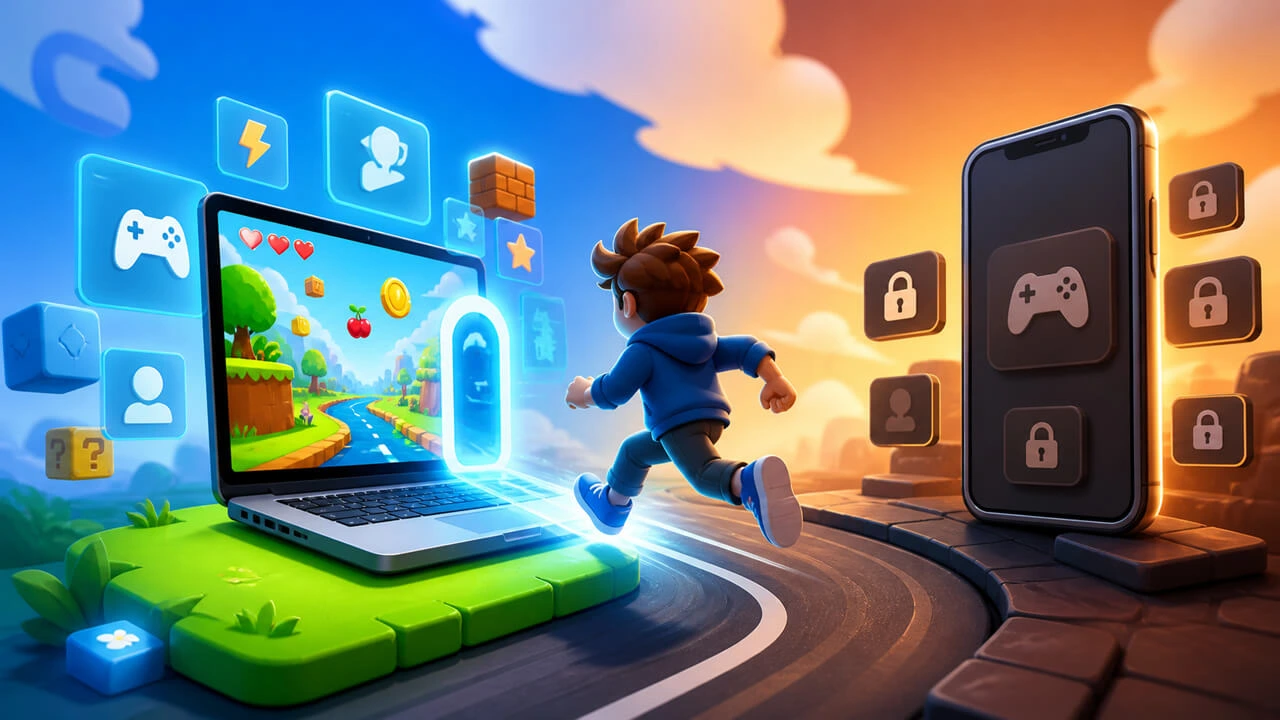
🔄 There’s a quiet reversal happening in how consumer products handle first-time users, and almost nobody is talking about it. The conventional wisdom for the past decade has been that native mobile apps deliver the best onboarding. They get pinned to home screens, they push notifications, they have access to deeper device APIs, and they signal commitment from both the user and the developer. Browser-based experiences were supposed to be a lightweight fallback for users who weren’t quite ready to commit.
That story is now wrong. Browser-based gaming, in particular, has spent the past few years quietly rebuilding its onboarding stack from the ground up, and the result is a first-time user experience that frequently outperforms what equivalent native apps deliver. The reasons are worth understanding because the same pattern is showing up across multiple consumer software categories that used to default to native-app-first thinking. The clearest evidence isn’t in casual browser games themselves. It’s in adjacent industries that have been forced to optimize browser onboarding under serious commercial pressure.
The clearest evidence isn't in casual browser games themselves. It's in adjacent industries that have been forced to optimize browser onboarding under serious commercial pressure. As Baseball America recently documented in its hands-on review of the California online gaming market, every major operator now runs entirely in the browser with no app download required, supports demo-mode play before signup, processes signups in five steps or fewer, and keeps the entire flow from landing page to first interaction under three minutes. That's a more polished onboarding pipeline than what most native mobile apps deliver in 2026, and it's been built specifically because browser-first distribution forced these operators to compete on every second of the funnel.
Browser-based gaming sits in the same competitive position. The operators that succeed are the ones who have eliminated friction, and the lessons they've internalized translate directly to Anyone designing for first-time users.
Why Browser-First Beats Native-First For Casual Users
The native-app-first orthodoxy assumed something that turned out to be wrong: that users would tolerate the install step in exchange for a richer experience. For high-engagement products with daily-use intent, that's still mostly true. But for the entire category of casual, occasional, or first-time-curious users, which is much larger than the engaged-daily user base most app metrics focus on, the install step is a fatal friction point.
🎮 A browser game asks for nothing. The user clicks a link, the game loads, and they're playing within seconds. A native app asks for an app store visit, a download, a permissions dialog, an account creation flow, and frequently several tutorial screens before gameplay starts. Each step has a measurable drop-off. The cumulative drop-off from landing page to ''first meaningful interaction'' is consistently 60-80% higher for native-app onboarding than for equivalent browser experiences.
For products that depend on capturing curious users, discovery-driven products, content- driven products, casual-entertainment products, the funnel difference is decisive. The native-an app-first strategy systematically loses the top of the funnel.
What Browser-Based Gaming Has Gotten Right
Three specific things browser games have refined that native apps mostly haven't.
Instant playability
A well-designed browser game should be playable within five seconds of the page loading. No login wall, no tutorial, no nag screens, just gameplay. The user can choose to engage further (sign up, save progress, unlock features) once they've already had the core experience. Native apps almost universally invert this, gating the experience behind signup before letting users see if they care.
Demo-Mode-First Design
The browser-game pattern of allowing demo or guest play before account creation has been refined to the point where it's now table stakes. Users who play in demo mode and decide to commit are vastly more likely to actually convert and stick than users who are forced into account creation before seeing the product.
Progressive Disclosure Of Complexity
Browser games have learned to layer their feature exposure so the first interaction is simple, and complexity unfolds as the user signals interest.
Compare this to the typical mobile-app onboarding flow that walks users through every feature before letting them touch the product. The browser approach respects user attention, and the conversion data strongly favours it.
The Cross-Industry Pattern
This isn't unique to gaming. The same browser-first onboarding optimization is showing up in document collaboration (Notion's web-first onboarding), design tools (Figma never even bothered with a serious mobile app), and increasingly in consumer financial products. The pattern is consistent: where products can deliver their core experience in the browser, the browser version tends to win the onboarding race even when a native app exists.
The iGaming sector mentioned earlier is the most aggressive example because the commercial pressure is most direct, every percentage point of funnel drop-off translates to immediate revenue loss. But the design lessons generalize. As we covered in our roundup of the best management browser sports games, the browser online games category has spent years internalizing exactly these lessons, and the results show in retention curves that compete favourably with paid native apps.
What This Means For Browser Game Design?
For developers building browser-based games, the implications are concrete. First, the install-step competitive advantage that native apps used to enjoy is gone. Browsers in 2026 can deliver near-native performance for most game types. WebGL has matured, WebAssembly handles the rest, and the Chrome/Safari/Firefox engines have closed most of the historical gap. The technical reasons to build native-first have largely evaporated for casual gaming.
Second, the onboarding patterns that work in browser gaming work because of the browser context, not despite it. The same flow that feels frictionless on the web (instant load, demo play, progressive signup) becomes friction-heavy when ported to a native app context, where the install step has already happened. Native apps need to justify the install with deeper engagement loops, and browser games need to justify the visit with immediate gratification. They're different design problems.
Third, the discovery model differs fundamentally. Native apps live or die by app-store rankings, browser games live or die by web search, social sharing, and direct linking. This is generally good news for browser games, search and social are more open distribution channels than app stores, and the SEO-driven discovery loop favours games with quality content over games with quality marketing budgets. According to Statcounter's browser usage data, mobile browsers continue to handle the majority of casual-browsing sessions globally, which means browser games have a genuinely larger addressable surface than the native-app-store market.
Where The Native-App Model Still Wins!
To be fair to native apps, there are categories where they still genuinely outperform browser experiences. High-engagement, daily-use, identity-driven products, banking, social media, messaging, and fitness tracking benefit from the install commitment, the home-screen real estate, and the deeper device integration. These aren't browser-game categories.
The mistake is assuming the native-app advantage extends to everything. For casual gaming specifically, and for first-time-user acquisition more generally, the browser model has caught up and in many cases pulled ahead.
Where This Is Heading
The next wave of browser games will lean even harder into the onboarding advantages the platform has accumulated. Instant-playability standards will tighten further. Demo-mode design will become more sophisticated, with smoother transitions to authenticated play. Cross-device session continuity (start on mobile browser, continue on desktop browser) will become the expected baseline.
The native-app-first orthodoxy isn't going to disappear, but its hold on consumer-product thinking is loosening. For browser-game developers, that's an opening. The infrastructure has matured, the audience has grown, and the design patterns that produce excellent first-time-user experiences are well-documented.
Browser games spent two decades being treated as the lightweight tier of the gaming market. The onboarding-quality reality has flipped. It's the native-app developers who should be studying browser-game playbooks now, not the other way around.
Blog / Wiki / BrightestGames
Date Added: Tuesday, 5 May 2026 (GMT-5) 10:14 Time in Chicago, IL, USA
Related Articles: Why Short Online Games Are So Rewarding?
Browser Gaming Platforms Lead To Surge In Instant-Play Entertainment!
Video Content Dominance: Why It’s Winning Digital Marketing Video Is Now the Default Format?
The Resurgence Of Browser-Based Gaming In A Cloud-First World
Poker Position Strategy For Reading Hands With More Confidence!


