 Brightest Games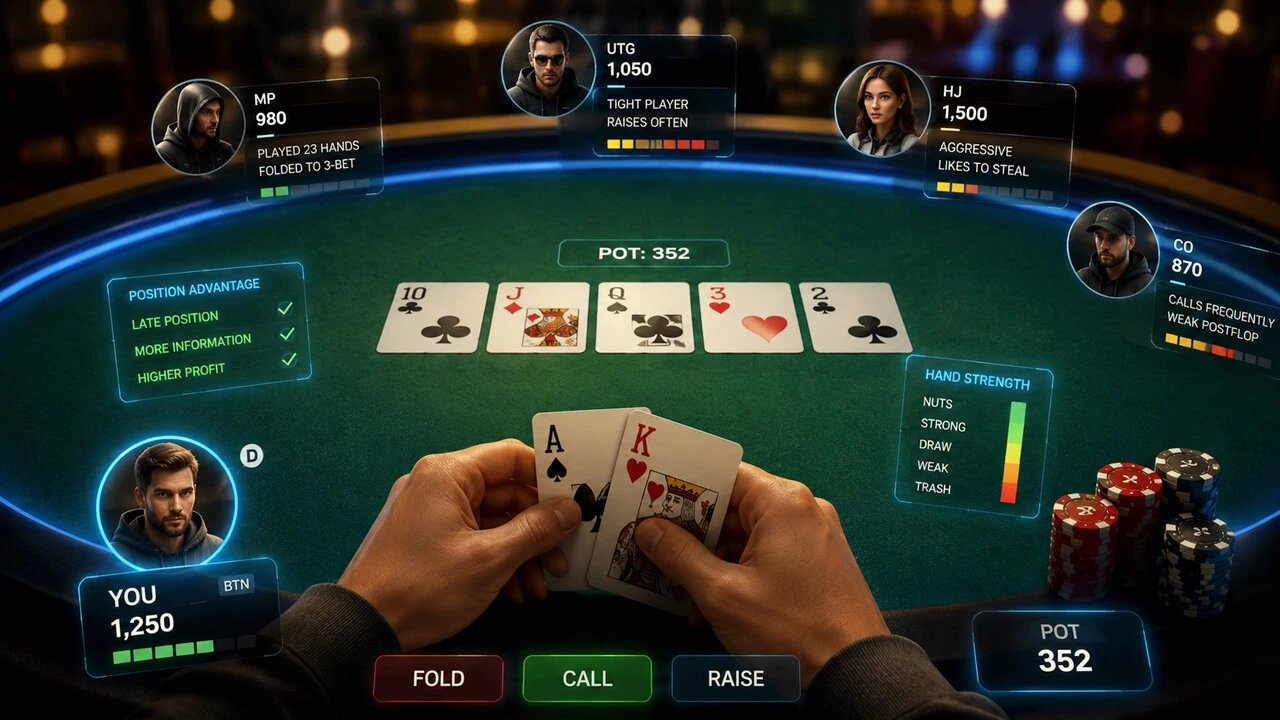
♠️ Poker position looks simple at first, but it quietly shapes every decision in the game. The same pair, suited connector, or ace can become aggressive, risky, or defensive depending on whether you act first or last. Position is not about being dealt stronger cards. It is about controlling the flow of information and making choices with a clearer picture of what everyone else is doing.
That is why the position feels familiar to players who enjoy strategy-heavy games, from competitive card games to tactical board games and browser-based strategy titles. Skilled players rarely focus on one move in isolation. They read timing, pressure, patterns, and the reactions of other players. In poker, acting later gives you the advantage of seeing the “battlefield” develop before making your move. The board changes, opponents reveal intentions, and every action adds another clue.
Position turns poker from a simple card game into a game of strategy, prediction, and calculated control. Recent research on chess decision-making makes a similar point: complex games create changing positions where the value of a move depends on context, not just the piece or card in front of you.
Applying Position In Real Poker Hands
Poker tables are often discussed through the early, middle, and late positions. Early position acts before most players, so uncertainty is higher. The middle position gives some information, but several players can still respond. Late position is clearest because more action has already happened.
This is where this online poker page fits naturally as a practical reference, since it presents formats such as cash games, Zone Poker, Sit & Gos, multi-table tournaments, Mystery Knockouts, and Incognito Poker, where acting order, starting-hand selection, and betting rounds matter.
Once the basic idea is clear, online poker gives players a way to notice position in motion: who opens first, who waits, who responds with more information, and why a hand that looks playable from late position may feel too thin from early position. The lesson is not “play more hands.” The better lesson is “understand how much information your seat gives you before you act.”
This poker strategy video shows that lesson directly, beginning with its introduction to the idea of “Position is Power” before moving into tighter starting hands, aggression, board reading, and emotional control. That order makes sense. Position shapes the next choices. A tight range matters more when you act early. Aggression works better when the table shows hesitation. Calm decisions become easier when you have more information, as seen on YouTube in this 10 Poker Cheat Codes Pros Don’t Want You To Know video.
Why Acting Later Feels Cleaner
Late position does not magically improve weak cards. It improves the decision around them. If everyone folds before you, a borderline hand may become easier to consider. If several players call or raise first, the same hand may deserve caution because the table has already shown interest.
This timing advantage also explains why card puzzles can build instincts. In poker, every card placement changes the shape of the next decision. You are not only trying to make a strong hand. You are reading what the layout allows and what it blocks. Poker position works in a related way. Each player’s action adds context before your own choice arrives.
Early position demands tighter judgment because you act before the room has shown its mood. The middle position asks for balance, since you have partial information but not full control. Late position rewards patience and observation because you can let the hand develop before committing to a line.
Position What You Know What It Rewards
Early Very little table action Discipline
Middle Some action, some uncertainty Balance
Late Most action before you Observation
Position Changes Starting-Hand Value
Many beginners memorize strong hands, then wonder why they still get stuck. The missing piece is position. A hand can be technically playable, yet awkward from an early position because too many players can still react. The same hand from late position may be easier to manage because you can see whether the table has shown strength or hesitation.
Late position does not permit you to play any old card, but it lets you widen your thinking with a better view of the hand. Strong cards are still strong. Weak cards are still limited. The middle zone is where position matters most: suited connectors, small pairs, broadway cards, and weaker aces shift in value depending on who has acted and who remains. This is why position play has a quiet, strategic beauty. Poker hands are not frozen at the deal. They are interpreted through seat order, table action, board texture, and timing. A good player is not just asking, “What do I have?” They are asking, “What do I know now?”
The Bigger Skill Behind Position
Position is ultimately a pattern-reading skill. It asks players to separate the final result from the quality of the decision. A late-position raise may work because earlier players showed passivity. An early-position fold may be correct because the hand would be hard to defend. A middle-position call may be reasonable on one hand and careless on the other because the surrounding action changes the meaning.
For casual players, the takeaway is clear: seat order gives information, and information changes decisions. Poker becomes less about reacting to cards and more about reading the hand as it develops. Many strategy games stay interesting long after the rules are learned. The board keeps changing, timing keeps shifting, and the better move respects what has already been revealed. Position gives poker its rhythm because every decision arrives with a different amount of context. Context separates a guess from a thoughtful play. The broader point is backed by work showing that cognitive control has limited capacity, which is why cleaner information can make complex decisions easier to handle.
Conclution
In poker or online card games, position is powerful because it gives players more information before they act. Strong decisions come not just from the cards themselves, but from reading timing, table behavior, and developing patterns. The later you act, the clearer the situation becomes, which allows for smarter and more controlled play. Ultimately, position turns poker into a game of strategy and observation, where understanding context matters as much as the hand you hold.
Blog / Wiki / BrightestGames
Date Added: Wednesday, 6 May 2026 (GMT-5) 12:59 Time in Chicago, IL, USA
Related Articles: Why Short Online Games Are So Rewarding?
Browser Gaming Platforms Lead To Surge In Instant-Play Entertainment!
Video Content Dominance: Why It’s Winning Digital Marketing Video Is Now the Default Format?
The Resurgence Of Browser-Based Gaming In A Cloud-First World
How Browser-Based Gaming Has Outpaced Mobile Apps In Onboarding Quality?
From Puzzle Games To Casino Games: Why Simple Rules Keep Players Hooked?


